

What Is Cannabis Compliance? Complete Overview
Nearly eight in ten american cannabis businesses face compliance hurdles each year, making regulatory clarity more important than ever. As the cannabis industry grows, understanding complex rules can make the difference between success and costly setbacks. This guide breaks down what cannabis compliance really means, why it matters, and how businesses and consumers can protect themselves in a rapidly changing marketplace.
Table of Contents
- Defining Cannabis Compliance And Its Purpose
- Types Of Cannabis Laws And Regulations
- Key Licensing And Documentation Requirements
- Tracking, Testing, And Reporting Obligations
- Penalties, Risks, And Avoiding Common Mistakes
Key Takeaways
| Point | Details |
|---|---|
| Cannabis Compliance Framework | Enforces legal standards to protect public health and ensure industry integrity, requiring businesses to adhere to complex regulations. |
| Diverse Regulations | Varies by jurisdiction, covering medical and recreational use, product quality, and distribution standards that require ongoing learning. |
| Comprehensive Licensing | Essential for legal operation, involving multiple documentation types and strict verification processes to prevent legal issues. |
| Risks of Non-Compliance | Involves significant financial penalties, license revocation, and potential legal actions, emphasizing the need for robust compliance strategies. |
Defining Cannabis Compliance and Its Purpose
Cannabis compliance represents the comprehensive framework of legal, regulatory, and operational standards that govern the production, distribution, and consumption of cannabis products. Regulatory adherence ensures that businesses and individuals operate within established legal boundaries, protecting public health and maintaining industry integrity.
According to Canadian Centre on Substance Use and Addiction, cannabis compliance involves strict regulations that control multiple aspects of cannabis-related activities. These regulations serve critical purposes:
- Preventing unauthorized access to cannabis products
- Protecting public health and safety
- Reducing potential criminal activities associated with unregulated cannabis markets
- Ensuring product quality and consumer protection
- Maintaining transparent operational standards
The primary objective of cannabis compliance goes beyond mere legal conformity. It creates a structured environment that balances consumer needs with public safety considerations. Health Canada emphasizes that comprehensive compliance frameworks help establish responsible cannabis industries that prioritize consumer well-being and societal interests.
For cannabis businesses and consumers, understanding and implementing compliance measures means navigating a complex landscape of regulations. This requires continuous education, meticulous record-keeping, and a commitment to following evolving legal standards. Whether you’re a producer, distributor, or consumer, compliance isn’t just a legal requirement – it’s a fundamental aspect of participating responsibly in the cannabis ecosystem.
Types of Cannabis Laws and Regulations
Cannabis laws and regulations represent a complex and evolving legal landscape that varies significantly across different jurisdictions. Legal frameworks for cannabis control encompass multiple dimensions, addressing medical use, recreational consumption, production standards, and distribution protocols.
National Conference of State Legislatures highlights the diversity of cannabis legislation across different regions, revealing several primary regulatory categories:
- Medical Cannabis Laws: Regulations governing prescription, patient access, and medical treatment
- Recreational Use Statutes: Rules defining legal consumption, possession limits, and public use restrictions
- Production Regulations: Standards for cultivation, processing, and quality control
- Distribution Guidelines: Licensing requirements, sales protocols, and commercial operation standards
- Age and Consumption Restrictions: Minimum age limits and consumption location guidelines
According to research from Academic Legal Studies, cannabis regulations typically include comprehensive enforcement mechanisms that address multiple critical aspects of cannabis control. These mechanisms range from strict licensing procedures to detailed tracking systems that monitor product movement from cultivation to final sale.
Navigating these intricate legal frameworks requires continuous learning and adaptability. As cannabis laws evolve rapidly, businesses and consumers must stay informed about local, state, and federal regulations. Cannabis delivery guide can provide additional insights into how these regulatory landscapes impact product accessibility and consumer experiences.
Key Licensing and Documentation Requirements
Cannabis licensing represents a critical gateway for businesses seeking to legally operate within the cannabis industry. This complex process involves multiple layers of regulatory compliance, documentation, and stringent verification mechanisms that ensure only qualified entities can participate in cannabis-related commercial activities.
Health Canada mandates comprehensive licensing requirements that typically encompass several key documentation categories:
- Operational Licenses: Permits for cultivation, processing, and distribution
- Business Registration Documents: Proof of legal business entity status
- Financial Compliance Certificates: Demonstrating fiscal responsibility
- Security Clearance Credentials: Background checks for key personnel
- Product Testing and Quality Assurance Documentation
According to the Network for Public Health Law, state-specific licensing requirements can vary dramatically, creating a complex landscape for cannabis businesses. These requirements often include:
- Detailed application processes
- Strict operational guidelines
- Ongoing compliance monitoring
- Regular documentation updates
- Comprehensive record-keeping standards
Navigating these intricate licensing requirements demands meticulous attention to detail and a proactive approach to regulatory compliance. Businesses must invest significant resources in understanding and implementing these complex documentation standards, recognizing that even minor oversights can result in significant legal and financial consequences.
IMAGE:descriptive_key_1] [Cannabis delivery guide can provide additional context about how these licensing requirements impact operational capabilities in the cannabis industry.
Tracking, Testing, and Reporting Obligations
Cannabis compliance demands rigorous tracking, testing, and reporting systems that ensure product safety, regulatory adherence, and transparent market operations. These critical obligations represent the backbone of responsible cannabis industry management, protecting both consumers and businesses from potential risks.
Marijuana Enforcement Tracking Reporting Compliance (METRC) systems have revolutionized how cannabis products are monitored throughout their entire lifecycle. These comprehensive tracking mechanisms provide detailed insights into product movement, ensuring accountability at every stage:
- Cultivation Tracking: Monitoring plant growth and harvest details
- Processing Documentation: Recording transformation and packaging processes
- Distribution Monitoring: Tracking product shipments and transfers
- Sales Verification: Documenting individual transaction records
- Inventory Management: Maintaining real-time product stock information
According to Cannabis Product Testing research, product testing represents another crucial compliance requirement. This process involves:
- Potency analysis
- Contaminant screening
- Pesticide residue detection
- Microbial safety assessment
- Cannabinoid and terpene profiling
Navigating these complex reporting obligations requires sophisticated technological solutions and meticulous attention to detail. Businesses must invest in robust tracking systems and comprehensive testing protocols to maintain regulatory compliance. Cannabis delivery guide can provide additional context about how these tracking requirements impact operational strategies in the cannabis industry.
Penalties, Risks, and Avoiding Common Mistakes
Cannabis regulatory compliance involves navigating a complex landscape of potential penalties and risks that can dramatically impact business operations. Understanding these potential consequences is crucial for maintaining legal standing and protecting organizational investments in the cannabis industry.
Health Canada outlines several critical penalty categories for non-compliance:
- Financial Penalties: Substantial monetary fines ranging from thousands to hundreds of thousands of dollars
- License Revocation: Potential immediate suspension or complete termination of operational licenses
- Criminal Prosecution: Potential legal actions for serious regulatory violations
- Reputational Damage: Long-term business credibility implications
- Operational Restrictions: Limitations on future business activities
According to the Network for Public Health Law, businesses frequently encounter common compliance mistakes that can trigger significant risks:
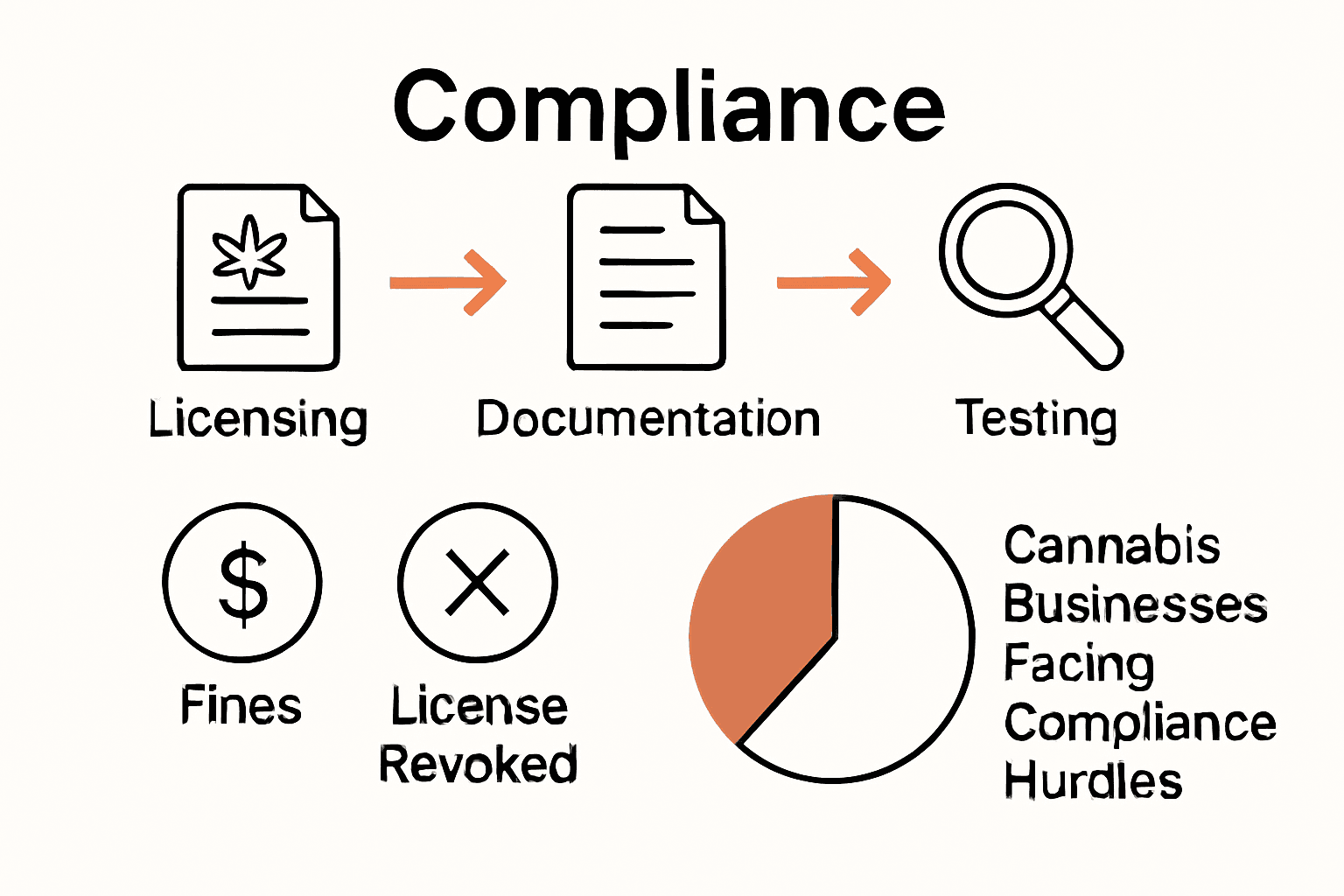
- Inadequate record-keeping practices
- Incomplete documentation of product movement
- Failure to comply with advertising restrictions
- Inconsistent age verification protocols
- Improper inventory tracking
Navigating these complex regulatory requirements demands proactive strategies and continuous education. Businesses must develop robust compliance frameworks that anticipate potential risks and implement comprehensive monitoring systems. Cannabis delivery guide can provide additional context about managing operational compliance effectively in the rapidly evolving cannabis marketplace.
Take Control of Cannabis Compliance and Enjoy Premium Products Responsibly
Understanding the complex landscape of cannabis compliance can feel overwhelming. From licensing requirements to tracking and testing obligations, navigating these legal details is critical to participating in the cannabis market safely and legally. The challenges lie in meeting strict regulations while accessing high-quality products that meet your needs for natural healing and relaxation.
At Grade A Dropouts, we recognize the importance of regulatory compliance for peace of mind and product integrity. Our commitment to operating within legal frameworks means you get carefully sourced THC-infused products that align with all compliance standards. Explore our full selection and learn more about responsible cannabis use by visiting our Uncategorized – Grade A Dropouts category where education meets premium quality.

Get started today with confidence. Visit Grade A Dropouts to browse trusted cannabis strains and enjoy smooth, compliant shopping backed by transparency and dedication to your well-being. Take the next step toward a safe and satisfying cannabis experience now.
Frequently Asked Questions
What is cannabis compliance?
Cannabis compliance is the comprehensive framework of legal, regulatory, and operational standards governing the production, distribution, and consumption of cannabis products. It ensures businesses and individuals operate within legal boundaries, protecting public health and maintaining industry integrity.
Why is cannabis compliance important?
Cannabis compliance is crucial for preventing unauthorized access to cannabis products, protecting public health and safety, reducing potential criminal activities, ensuring product quality, and maintaining transparent operational standards. It creates a structured environment that balances consumer needs with public safety considerations.
What are the main types of cannabis laws and regulations?
The main types of cannabis laws and regulations include medical cannabis laws, recreational use statutes, production regulations, distribution guidelines, and age and consumption restrictions. These laws vary significantly across different jurisdictions and encompass several critical dimensions of cannabis control.
What are the typical licensing requirements for cannabis businesses?
Typical licensing requirements for cannabis businesses include operational licenses for cultivation and distribution, business registration documents, financial compliance certificates, security clearance credentials, and product testing and quality assurance documentation. Compliance with these requirements is essential for legal operation within the cannabis industry.