


What Is Cannabis Pricing? Complete 2025 Overview
Most American consumers are surprised to learn that cannabis prices can swing by more than 50 percent depending on regional regulations and market maturity. Understanding the forces driving these price shifts is crucial because taxes, local laws, and cultivation costs all play a part in what ends up on dispensary shelves. Whether you are new to the market or refining your business strategy, knowing these basics helps you make smarter choices in the evolving American cannabis scene.
Table of Contents
- Defining Cannabis Pricing And Market Basics
- Major Factors Affecting Cannabis Prices
- Regional Price Differences And Legal Influences
- Quality, Strain, And Formulation Impact
- Taxes, Discounts, And Typical Consumer Costs
Key Takeaways
| Point | Details |
|---|---|
| Complex Influences on Pricing | Cannabis pricing is shaped by production costs, regulatory frameworks, supply and demand, and regional differences. Understanding these factors is crucial for consumers and industry professionals. |
| Market Volatility and Adaptation | The cannabis market faces pricing volatility influenced by oversupply and changing regulations. Businesses must adapt their pricing strategies to remain competitive and sustainable. |
| Regional Disparities | Pricing varies significantly by region due to local tax rates and legal environments. Successful operators must navigate these complexities to maintain discipline in pricing models. |
| Impact of Quality and Formulation | Quality of cannabis strains significantly affects pricing, driven by cultivation methods and consumer demand. Industry players should focus on emerging quality trends to optimize their market position. |
Defining Cannabis Pricing and Market Basics
Cannabis pricing represents a complex ecosystem influenced by multiple interconnected market dynamics. At its core, cannabis pricing reflects the intricate balance between production costs, regulatory constraints, supply and demand, and regional market variations. Understanding these fundamental factors helps consumers and industry professionals navigate the nuanced landscape of cannabis economics.
The cannabis market experiences significant pricing volatility driven by several key elements. Oversupply in certain regions, combined with strict regulatory frameworks, creates substantial pricing pressure. Wholesale and retail prices fluctuate based on factors like cultivation expenses, taxation rates, product quality, and local market competition. In states like California, regulatory changes have dramatically reshaped market stability, directly impacting pricing structures.
Key components that influence cannabis pricing include:
- Production and cultivation costs
- State and local tax regulations
- Quality and potency of cannabis strains
- Distribution and transportation expenses
- Market demand and consumer preferences
Market experts anticipate continued price adjustments as the cannabis industry matures. Strategic producers and dispensaries will need to balance competitive pricing with sustainable business models, adapting to evolving consumer expectations and regulatory landscapes.
Major Factors Affecting Cannabis Prices
Cannabis pricing is a dynamic landscape influenced by multiple complex variables that extend far beyond simple supply and demand. Production costs represent the foundational element driving price fluctuations, with cultivation, processing, and distribution expenses creating significant economic pressure for cannabis businesses. These underlying costs directly impact the final retail price consumers encounter.

Emerging market risks have substantially complicated pricing strategies, introducing unprecedented volatility. Recent economic developments, including tariff implementations, have increased production expenses, potentially pushing some consumers toward alternative purchasing channels.
Key factors driving cannabis pricing include:
- Regulatory compliance expenses
- State and local tax structures
- Agricultural production costs
- Transportation and distribution logistics
- Quality and potency of cannabis strains
- Market competition intensity
Market dynamics suggest that strategic cannabis businesses must continuously adapt their pricing models. Successful operators will balance competitive pricing with sustainable operational costs, carefully navigating the complex economic ecosystem of cannabis commerce. Understanding these intricate pricing mechanisms allows consumers and industry professionals to make more informed purchasing and investment decisions.
Regional Price Differences and Legal Influences
Cannabis pricing varies dramatically across different regions, primarily driven by complex legal frameworks and regulatory environments. Each state maintains unique cannabis legislation that directly impacts market dynamics, creating significant price disparities between neighboring jurisdictions. These legal nuances fundamentally shape how cannabis products are produced, distributed, and sold, ultimately influencing consumer pricing.
States with more mature cannabis markets, such as California and Oregon, typically demonstrate more competitive pricing structures due to established regulatory systems and extensive cultivation networks. Conversely, regions with more restrictive legal approaches experience higher prices driven by limited supply, increased compliance costs, and more complex distribution channels. Premium cannabis selection becomes particularly challenging in markets with stringent regulatory requirements.
Key regional pricing influences include:
- State tax rates and cannabis legislation
- Local licensing and compliance expenses
- Market competition levels
- Transportation and distribution restrictions
- Local cultivation capabilities
- Consumer demand and market maturity
Navigating these regional price differences requires consumers and businesses to understand the intricate legal landscape. Successful cannabis businesses must remain adaptable, understanding that pricing strategies are not universal but instead deeply connected to local regulatory environments and market conditions. Strategic operators will continuously adjust their approaches to maintain competitive pricing while ensuring compliance with evolving legal frameworks.
Quality, Strain, and Formulation Impact
Cannabis quality represents a critical determinant in pricing structures, with multiple factors influencing product valuation. Cultivation methods significantly impact wholesale pricing, creating substantial variations between indoor, outdoor, and mixed-light grown cannabis products. Premium strains with unique genetic profiles and consistent cannabinoid content command higher prices due to their specialized cultivation requirements and targeted effects.
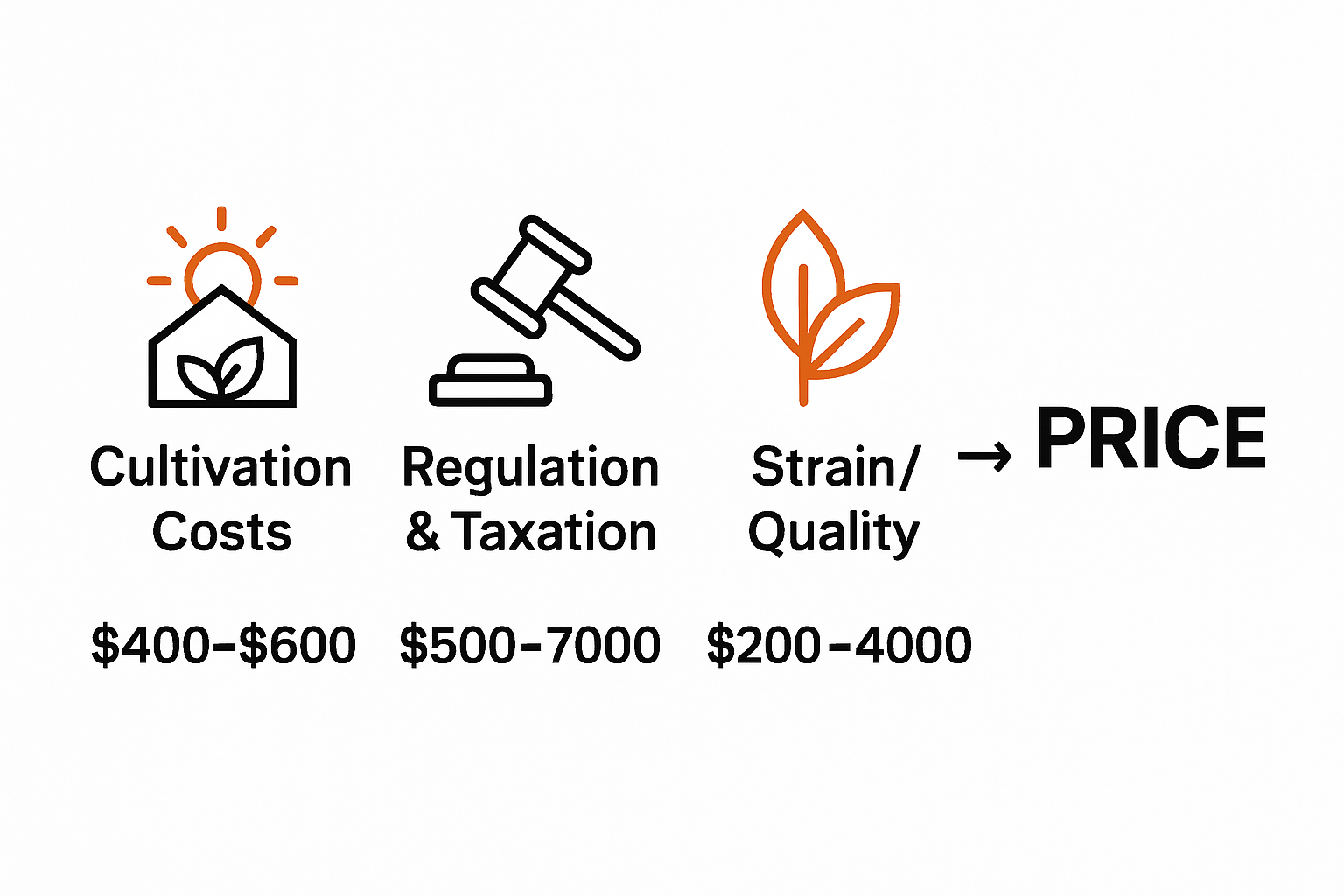
Advancements in cultivation technology have revolutionized strain development, enabling producers to create more consistent and potent cannabis varieties. These genetic innovations directly translate into pricing strategies, with rare or scientifically engineered strains demanding premium market rates. Product formulation adds another layer of complexity, with different consumption methods like flower, vape cartridges, and edibles exhibiting distinct pricing models.
Key factors influencing strain and quality pricing include:
- Genetic complexity and rarity
- Cannabinoid and terpene profile
- Cultivation technique sophistication
- Consistency of production
- Potency and therapeutic potential
- Research and development investment
Consumers and industry professionals must recognize that cannabis pricing extends beyond simple supply metrics. The intricate interplay between scientific innovation, cultivation expertise, and market demand creates a dynamic pricing ecosystem where quality directly correlates with market value. Strategic producers will continue to invest in genetic research and cultivation technologies to differentiate their offerings and command competitive pricing.
Taxes, Discounts, and Typical Consumer Costs
Cannabis taxation represents a complex economic landscape that significantly impacts consumer pricing. State-level taxation models create substantial variations in overall product costs, with some jurisdictions implementing multiple layers of excise, sales, and regulatory taxes that can dramatically increase the final consumer price. These tax structures not only generate revenue for local governments but also substantially influence market dynamics and consumer purchasing behaviors.
Retail pricing trends in cannabis markets demonstrate intricate markup strategies that go beyond simple taxation. Wholesale-to-retail price transformations involve multiple cost considerations, including compliance expenses, distribution costs, and market positioning. Consumers often encounter significant price variations, with discounts and promotional strategies playing a critical role in market competitiveness.
Key components affecting consumer costs include:
- State and local tax rates
- Excise and sales tax implementations
- Wholesale to retail markup percentages
- Seasonal and volume-based discounts
- Compliance and regulatory expenses
- Market competition levels
Navigating cannabis pricing requires consumers to understand the complex interplay between taxation, market forces, and strategic pricing. Savvy consumers will compare prices across different dispensaries, understand local tax implications, and leverage promotional offers to optimize their purchasing strategies. The cannabis market continues to evolve, with pricing models becoming increasingly sophisticated and consumer-focused.
Unlock Premium Cannabis Pricing Insights with Grade A Dropouts
Understanding the complexities of cannabis pricing can be overwhelming. From navigating variable production costs to grappling with diverse state tax structures and product quality differences this article breaks down essential factors shaping 2025 cannabis market prices. If you want to explore premium cannabis strains priced competitively and aligned with the latest market trends visit our Uncategorized – Grade A Dropouts section where quality meets affordability.

Dive deeper into the world of THC-infused products at Grade A Dropouts. Whether you are a seasoned cannabis consumer or seeking natural healing alternatives now is the perfect time to experience carefully sourced cannabis strains from Oregon California and Washington. Take advantage of our free delivery on orders over $200 and tap into our educational podcast to stay informed about cannabis pricing factors and wellness benefits. Start making smart purchasing decisions today by visiting Grade A Dropouts and discover pricing transparency combined with premium quality.
Frequently Asked Questions
What factors influence cannabis pricing?
Cannabis pricing is influenced by production and cultivation costs, state and local tax regulations, quality and potency of cannabis strains, distribution expenses, and market demand and consumer preferences.
How does quality affect the price of cannabis products?
The quality of cannabis significantly impacts its pricing. Premium strains with unique genetic profiles and high consistency in cannabinoid content typically command higher prices due to their specialized cultivation and targeted effects.
Why do cannabis prices vary between different regions?
Cannabis prices vary dramatically between regions due to differing legal frameworks and regulatory environments. States with mature markets usually have more competitive pricing, while areas with restrictive laws may see higher prices due to limited supply and increased compliance costs.
What role do taxes play in cannabis pricing for consumers?
Taxes, such as state excise and sales taxes, significantly impact the final consumer pricing of cannabis products. Different jurisdictions have varying tax structures that can increase product costs, influencing consumer purchasing behaviors.